
Chiricahua National Park, a First-Timer’s Guide to America’s Newest National Park
Destination Advice · Arizona
Chiricahua National Park, a First-Timer’s Guide to America’s Newest National Park
In the southeastern corner of Arizona, a landscape of rhyolite spires and balanced rocks became Chiricahua National Park on October 20, and it’s a place that rewards an unhurried first visit.
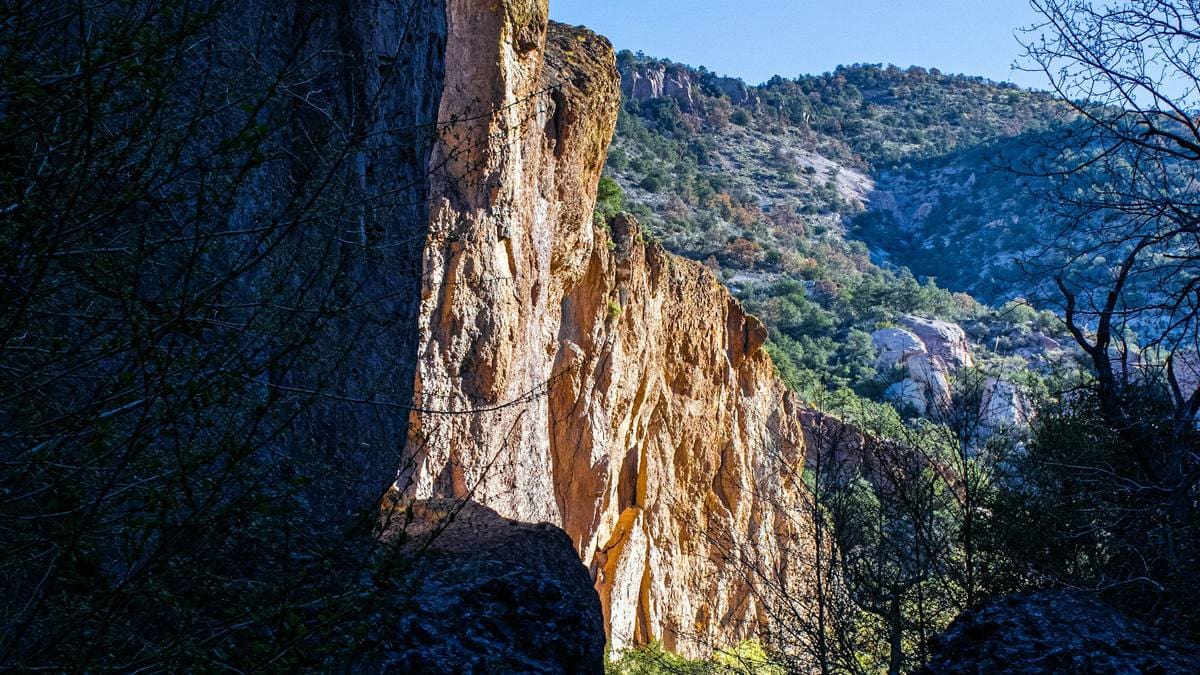
The rock spires at Chiricahua began with a volcanic eruption roughly 27 million years ago, and the National Park Service describes what’s left today as towering rhyolite pinnacles and balanced rocks rising from a “sky island” in the Chiricahua Mountains, where desert, grassland and forest meet. On October 20, 2026, the area that had been protected as Chiricahua National Monument since 1924 became Chiricahua National Park, which makes it America’s newest national park.
The name changed, and the landscape it protects is the same, covering about 12,000 acres near Willcox. The park also holds thousands of years of human history, including its place as the homeland of the Chiricahua Apache, along with the story of the early homesteading families at Faraway Ranch.
Bonita Canyon Drive, the way in
Bonita Canyon Drive is an eight-mile scenic road that winds up through the rock formations and ends at Massai Point. Along the way there are five pull-offs, including the Organ Pipe Formation, and the Park Service notes that the stop at Bonita Creek is often the best birding in the park. The Faraway Ranch Historic District sits along the same route.
The upper road is built for standard-size vehicles, and the park’s scenic drive page sets limits on longer vehicles and trailers past Faraway Ranch and the campground, which is worth knowing for anyone driving something larger than a car.
Three walks, from a half-mile loop to a full day
The Massai Point Nature Trail is a half-mile loop at the top of the drive, at about 6,870 feet, where interpretive signs explain how the formations developed. The Park Service lists it at around 30 minutes and notes that the altitude, the stairs and the uneven footing can make it feel harder than the distance suggests, and the first tenth of a mile is paved with a steep grade.
The Echo Canyon Loop is about 3.4 miles with roughly 560 feet of total elevation change, and the park rates it moderately difficult on uneven ground. It passes the Echo Canyon Grottoes and climbs back under rock pinnacle cliffs on the Ed Riggs Trail. The park says it can be done in two hours, and that most people prefer to give it three or four. The trailhead has parking and pit toilets and no water.
The Heart of Rocks Loop is the long day, at 7.3 miles round trip and four to six hours, and the park rates it strenuous, with rock steps and rocky stretches. It leads to Big Balanced Rock and Pinnacle Balanced Rock.
During the busiest winter months the park may run a hiker’s transport on weekends, leaving Faraway Ranch at 9 a.m. and dropping hikers at Massai Point or Echo Canyon so they can walk back down. It depends on staffing and weather, runs first come, first served, and the park’s calendar shows whether it’s running.
When the park is busiest and quietest
According to the Park Service, March is the busiest month at Chiricahua, and summer has the fewest visitors, which is unusual for a park. From October through April, parking can be tight on weekends, and snow is possible from November through April, sometimes staying for about a week. Summer brings high temperatures and sudden monsoon storms.
What a first visit involves
Chiricahua has no entrance or parking fees, and the park sells no entrance passes. The nearest gas is in Sunizona, 27 miles southwest, or Willcox, 37 miles northwest, which is also where the closest restaurants and groceries are. Cell reception tends to drop out on the roads near the park. Dogs are allowed only on some trails, on a leash, including the path through the trees and meadow from the campground to the historic district.
The park’s own hiking page gives the most useful advice for a first visit. Visitors coming from lower elevations need time to adjust to the altitude and sun, so a shorter trail on the first day makes sense before a longer one, with plenty of water, salty snacks and sun protection along.
How I’d plan a first visit
When I plan a trip to a place like this, I start with the drive time and build in a night nearby so the first morning can begin at Massai Point while the light is low, and I match the walk to the person, so a first day might be the nature trail and the drive while a second day takes on Echo Canyon or the Heart of Rocks.
Stargazing is on the Park Service’s list of things to do here, alongside hiking, camping, birding and wildlife viewing, so the evenings have something to offer once the hiking is done.
If a quieter park with a big landscape sounds like your kind of trip, my free Restorative Travel Guide walks through how to choose a place and a pace that leave you rested.
Get the Restorative Travel GuideAnd when you’re ready to start planning, you can tell me about the trip you’re imagining here.
Restorative Journeys by Debra Orringer
Debra Orringer, MS, ACE-MES, ACSM-CEP, CIHC