
Japan in Autumn, From the Mountains in October to Kyoto in December
Destination Advice · Japan
Japan in Autumn, From the Mountains in October to Kyoto in December
Japan’s autumn color starts high in the mountains and reaches Kyoto last, so the lovely question is which part of the season you’d like to meet.
On a clear morning in the middle of October, a sightseeing boat pulls away from the shore of Lake Chuzenji while the forest around the water turns red and gold on the slopes above you. The lake sits almost 1,300 meters up in the mountains above Nikko, and the boats loop around it in about an hour, which is long enough to watch the light move across the hillsides and still leaves the afternoon free for whatever you feel like doing next.
How the color moves
Japan’s autumn color arrives in waves that begin in Hokkaido’s Daisetsuzan mountains, where forecasters expected the slopes to be at their best from late September into the first days of October, and from there it travels south and downhill toward the cities as the weeks go by. That means the same country gives you two very different trips depending on when you go, with the high lakes and gorges in October and the city avenues and gardens late in the year.
October in the mountains above Nikko
Lake Chuzenji is usually at its most colorful in mid to late October. Its only outlet is Kegon Falls, which drops almost 100 meters into the gorge below, and the trees around the falls tend to be at their brightest over those same weeks. From there the Irohazaka road carries you down more than 400 meters through 48 hairpin turns, each one named for a character of an old Japanese syllabary, and because the upper curves color in mid-October while the lower ones wait until early November, the drive down can feel like passing through several weeks of the season in a single afternoon.
A little beyond the lake, the Senjogahara marshland changes color too, as its grasses turn a reddish yellow and the larch trees go a shining gold from mid-October into early November.
When I plan this part of a trip, I put the mountain days midweek, because the road between town and the high country gets very busy on October weekends and the buses can run well behind schedule, and it’s an easy change to make when the trip is built around your own pace.
Late November in Tokyo
By the end of November the color has reached the capital. The Japan Meteorological Corporation’s forecast, updated on October 1, puts Tokyo’s ginkgo trees at their yellowest around November 26, with the red maples following a couple of days later. The ginkgo-lined avenue at Meiji Jingu Gaien turns gold at the end of the month, and a slow walk under it with a warm drink in your hand is a lovely way to spend a Tokyo afternoon.
Kyoto comes last
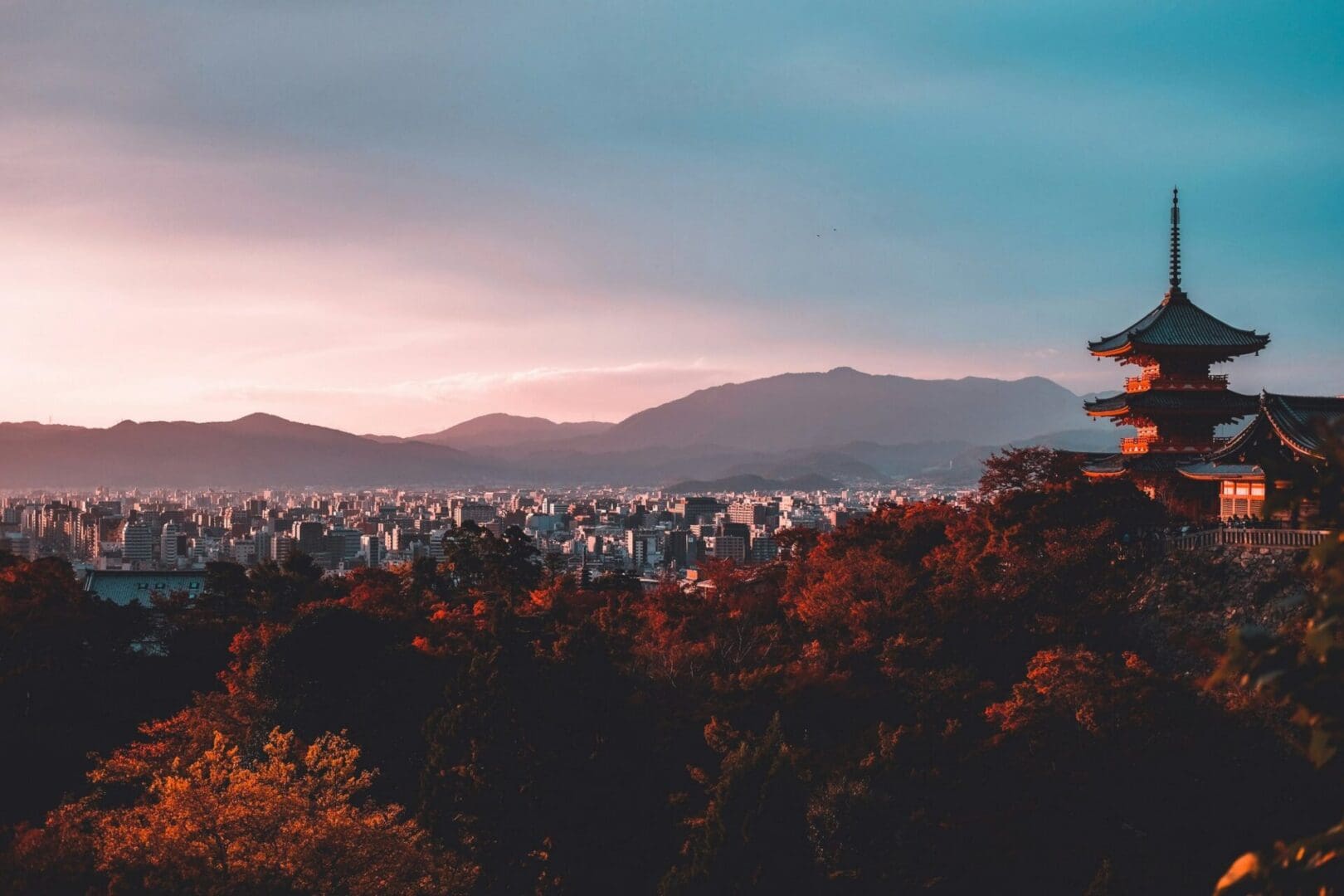
Kyoto’s maples finish the season, and this year the same forecast expects them to be at their reddest around December 11, about a week later than the average date. That timing means a trip that starts in Tokyo in the last days of November and ends in Kyoto in the second week of December can catch the color in both cities. Arriving in Kyoto in December also means you’re traveling into cool early-winter days, when wrapping up in a coat to walk through a temple garden feels exactly right.
Why the cool air is part of the appeal
For women in perimenopause and menopause, there’s one more reason to like this season. A 2026 review in Maturitas by researchers at the London School of Hygiene & Tropical Medicine gathered the studies on heat and menopause, and while it found no consistent sign that hot weather itself makes hot flashes worse, a few small studies suggested that cooler surroundings may ease symptoms and help with sleep. The review maps early evidence and can’t show cause and effect, so the fair way to put it is that crisp mountain air and cool December evenings may make for easier nights, which is a nice thing to have on your side on a trip you’re taking entirely for yourself.
Whether you’re drawn to the lake in October or to Kyoto in December, this is a trip you get to shape around what you want to see and how you want to feel while you see it, and that choice is yours to make.
If a trip like this is calling you, my free Restorative Travel Guide is a good place to start.
Get the Restorative Travel GuideReady to start planning? Tell me about your trip here.
Restorative Journeys by Debra Orringer
Debra Orringer, MS, ACE-MES, ACSM-CEP, CIHC