
The City I Send People To When They Want a Week That Doesn’t Wear Them Out
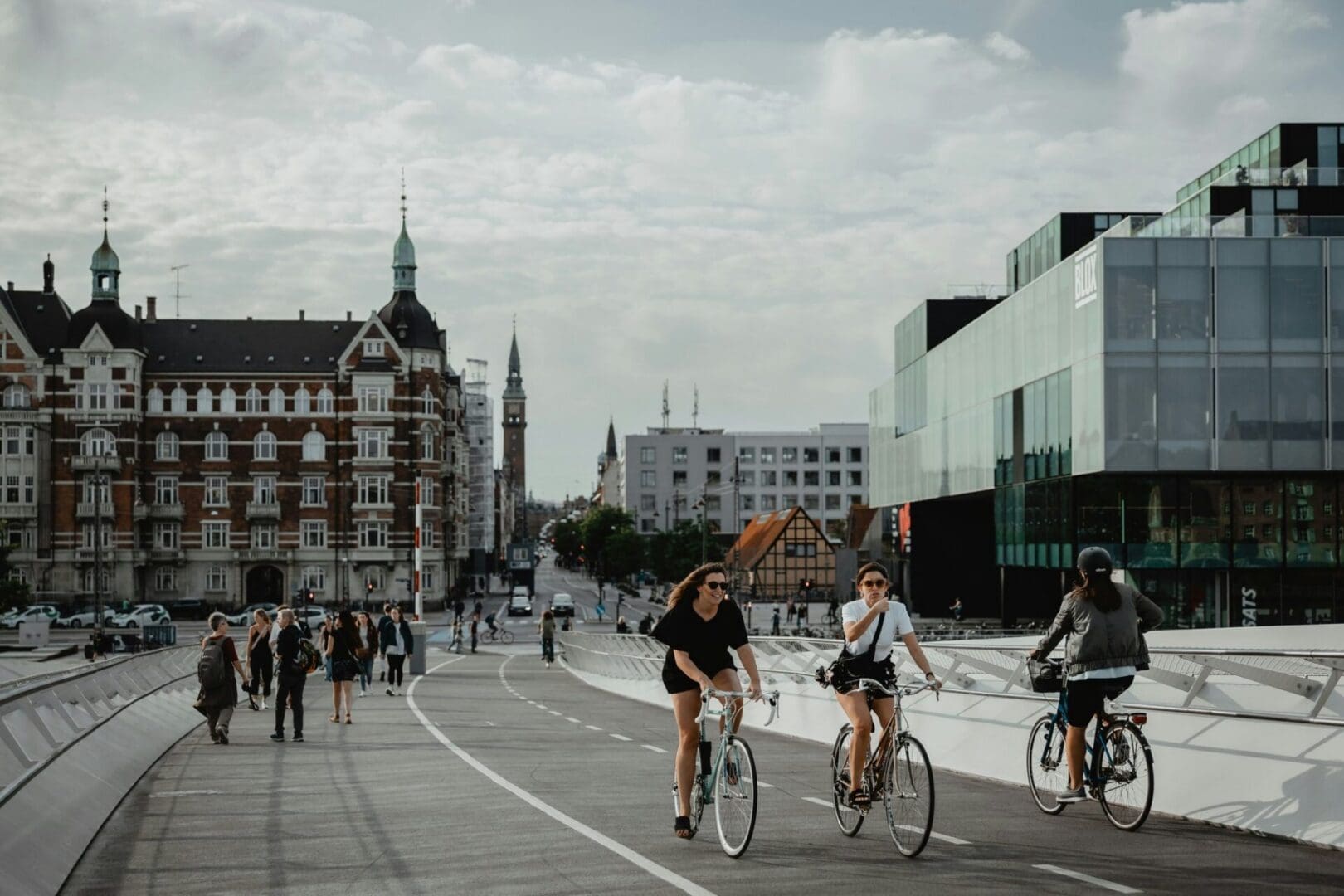
Copenhagen is arranged around slowing down, which makes it the rare capital you come home from rested.
Somewhere in the middle of Copenhagen there is a bridge an artist designed so that people would cross it slowly, built from five round platforms set slightly out of line with one another, so that walking over it means shifting your weight and changing direction a few times before you reach the other side. A city willing to spend money on a bridge like that is telling you something about what it values, and in Copenhagen’s case the rest of the place bears it out.
I mention it because of a complaint I hear constantly from women who have quietly given up on city breaks. They come home from four days in a European capital more tired than when they left, having walked eleven miles a day between the things they felt obliged to see, and the trip ends up on the list of things that drained them rather than the list of things that gave something back. After enough of those, people stop looking at cities altogether and start looking only at beaches, which I understand completely, although I think it throws out something worth keeping.
What makes Copenhagen the exception is that the best of it happens outdoors, costs nothing, and sits close enough together that you can reach it on foot without building your day around the logistics.
In summer you can swim in the harbor in the middle of the city, off wooden platforms with a diving tower at the end of the dock, free to anyone who turns up, and the city treats this as a normal way to spend a Tuesday afternoon rather than as an attraction. The light does something similar to the shape of a day, because around midsummer the sun goes down just before ten and the sky stays usable for an hour after that, so dinner outside at half past nine feels like the middle of the afternoon and the compression that usually governs a short trip stops applying.
Forty minutes up the coast there is a museum built as a series of glass corridors running through a park rather than as a building with rooms in it, and its sculpture lawn runs downhill toward the water with a Henry Moore reclining on the slope above the sea. It stays open into the evening several nights a week, which is a rare thing to be able to say about art, and it means a museum can be the end of your day rather than the thing you have to get to before it shuts.
Underneath a park in the city there is a cistern that held Copenhagen’s drinking water in the 1850s and has been sitting quietly under the grass ever since, where water still finds its way through the ceiling and builds stone formations up from the floor, and where a single artist is handed the entire space each year. Your phone gets no signal down there, which for most of the women I send is the reason to go.
What these have in common is that none of them require you to be anywhere at a particular hour, and that turns out to be the quality I am really looking for when someone tells me she wants a week away and is afraid she will come home needing another one. You can walk out in the morning with no plan at all and find that the city has already met you halfway.
It is also among the easiest capitals in Europe to be alone in, because eating by yourself attracts no attention whatsoever and the distances are short enough that you are never far from your room at the exact hour your energy runs out.
As for when to go, the long light is the obvious argument for summer, and the short days are the quieter argument for January, when the museums stay open late and, in a cold enough year, the lakes freeze hard and the whole city walks out onto them.
If you want help working out what a restorative week would look like for you, I put together a free Restorative Travel Guide on choosing a place and a pace that will leave you better than it found you. It is a short read.
And if you would rather just start planning, tell me what you have in mind here.
Debra Orringer, MS, ACE-MES, ACSM-CEP, CIHC, owns a luxury travel business designing restorative journeys.