
The Four Hours Where Nothing Is Asked of You
Restorative Journeys
A stretch of railway between Switzerland and Italy is a UNESCO World Heritage site. What makes it worth building a week around is what you are doing while you sit on it, which is nothing.
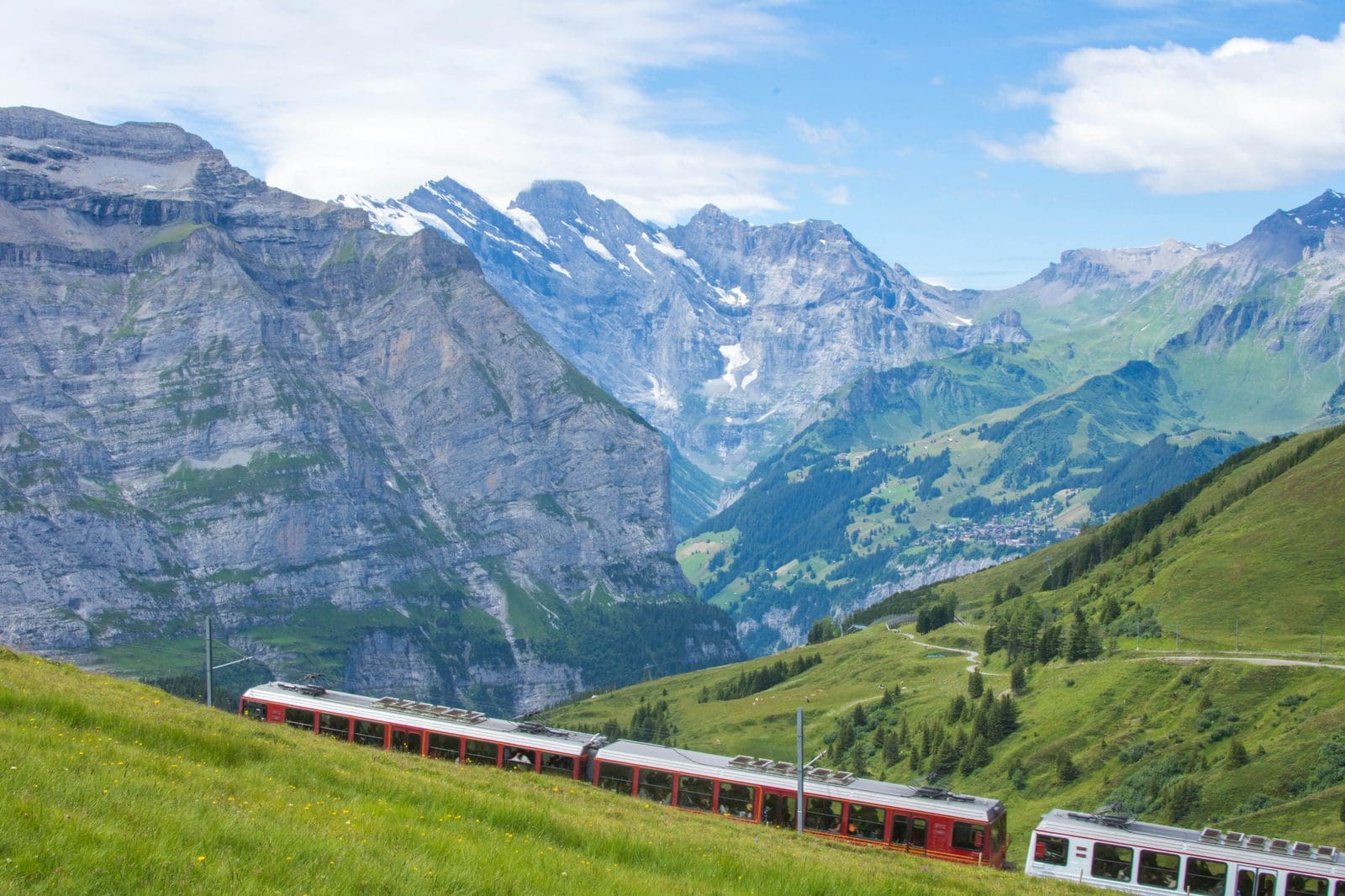
You board at Thusis in the early afternoon. The seat is yours until the end. There is no connection to make, no bag to move, no decision waiting for you at the other end of a corridor. For the next several hours the only thing on your schedule is looking out a window at a valley that keeps rearranging itself.
Most women I plan for arrive at the idea of a restorative trip through exhaustion. They have been managing something, often several things, for years. When they picture rest they usually picture a room. A quiet hotel, a view, a bath, a bed with good sheets. All of that helps. What surprises them is how much of the rest actually happens in transit, on the days they assumed they would have to endure.
Why this particular railway
The line between Thusis and Tirano was added to the UNESCO World Heritage List in 2008, under criteria (ii) and (iv), and it is a transnational site shared by Switzerland and Italy. Railways rarely get this designation. UNESCO gave it for the engineering and for the way the engineering sits inside the landscape rather than bulldozing through it.
The numbers are worth knowing because they explain the pace. The Albula line opened in 1904, runs 67 kilometers, and carries 42 tunnels and covered galleries along with 144 viaducts and bridges. The Bernina line adds another 61 kilometers, 13 more tunnels and galleries, and 52 more viaducts and bridges. Put together that is 128 kilometers of track, 196 viaducts and bridges, and 55 tunnels, on a route built more than a century ago.
Somewhere along the Albula stretch the track curves onto the Landwasser Viaduct and runs straight into the face of a cliff, where a tunnel mouth is waiting. You see it coming for a while before you reach it. Then the light goes, and a few seconds later it comes back, and you are somewhere else.
The part that does the restorative work
Here is the thing I have watched happen on trips built this way. A day with a long, fixed, unhurried leg in the middle of it changes the shape of the whole week.
On a driving day, you are working. You are watching signs, holding a route in your head, deciding when to stop. On a flying day you are queueing, producing documents, managing a bag, absorbing other people’s stress in a confined space. Both of those days cost you something, and the cost gets paid out of the same reserve you came on the trip to refill.
A day on a train like this gives you six or seven waking hours where your body is still, your eyes have something to rest on that keeps changing, and nobody needs anything from you. You eat when you want. You read for twenty minutes and then stop reading because the window got better. You have a conversation with the person across from you that would never have happened at home, because at home one of you would have gotten up to do something.
That is Restoration in the plain sense, and it is also Connection, and it happens without anyone scheduling a session or lighting a candle.
How I use it when I plan
I put the rail leg on the second or third day, after the first night has absorbed the flight. Arriving somewhere and immediately taking a long train is a real way to make a person feel worse.
We book seats on the side of the carriage with the better views for the direction of travel, which is a small thing that people notice all afternoon. We keep the luggage light enough that it is genuinely handleable, or we send it ahead.
And I protect the evening on the other end. The descent finishes in Tirano, in Italy, where the language changes and dinner is later than it was at breakfast. That evening should have nothing in it. A walk, a meal, an early night. The train has already given you the day.
Who this suits
Women in midlife who want a week away and do not want the week to be a project. This is a good shape for anyone who has been the person who organizes everything, because the railway takes the organizing away for an entire day and hands back a view.
It also works when travel energy is uneven, which for a lot of us it now is. Sitting for five hours in a comfortable seat with the Alps going past asks nothing of your knees, your sleep, or your capacity for other people’s decisions.
If you are somewhere near the beginning of this and want a place to start, my Restorative Travel Guide is free and it is the first thing I send people who know they need a week away and are not yet sure what kind.
Get the Restorative Travel Guide
And if you are already thinking about dates, you can tell me what you have in mind here.
Debra Orringer, MS, ACE-MES, ACSM-CEP, CIHC